
Adults, beginners welcome
Quranic Arabic
عربية القرآنUnderstand the language of the Quran through clear, step-by-step grammar and morphology.
 Taught by Esatrained in Makkah
New to Arabic grammar? Beginners are welcome. We start from the basics and build up step by step.
Arabic grammar (Nahw)
To help you start understanding the Quran as quickly as possible, we begin with the most essential and practical parts of Arabic grammar. You build a strong foundation without feeling overwhelmed. Core topics include:
- إضافة Idafah: possession and “of” constructions
- موصوف وصفة Mawsuf and sifah: nouns and their adjectives
- أقسام الكلمة Aqsam al-kalimah: the three kinds of word
- أنواع الجملة Anwa’ al-jumlah: the kinds of sentence
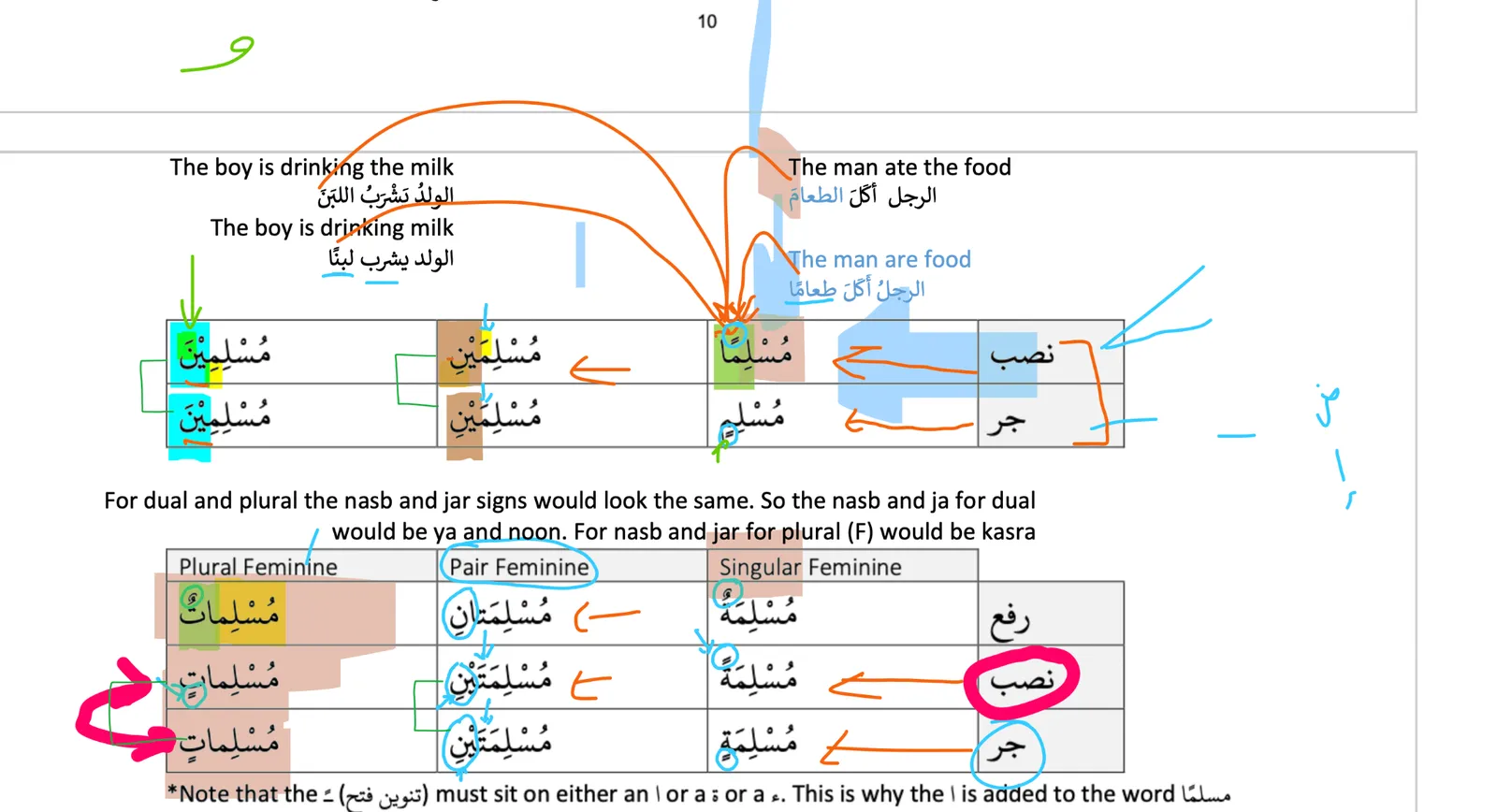
- الإعراب I’rab: how word endings show meaning
Once you have mastered these, you will be able to analyse and understand many Quranic verses much sooner. From there we move on to more advanced topics as you progress.
The Madinah Book
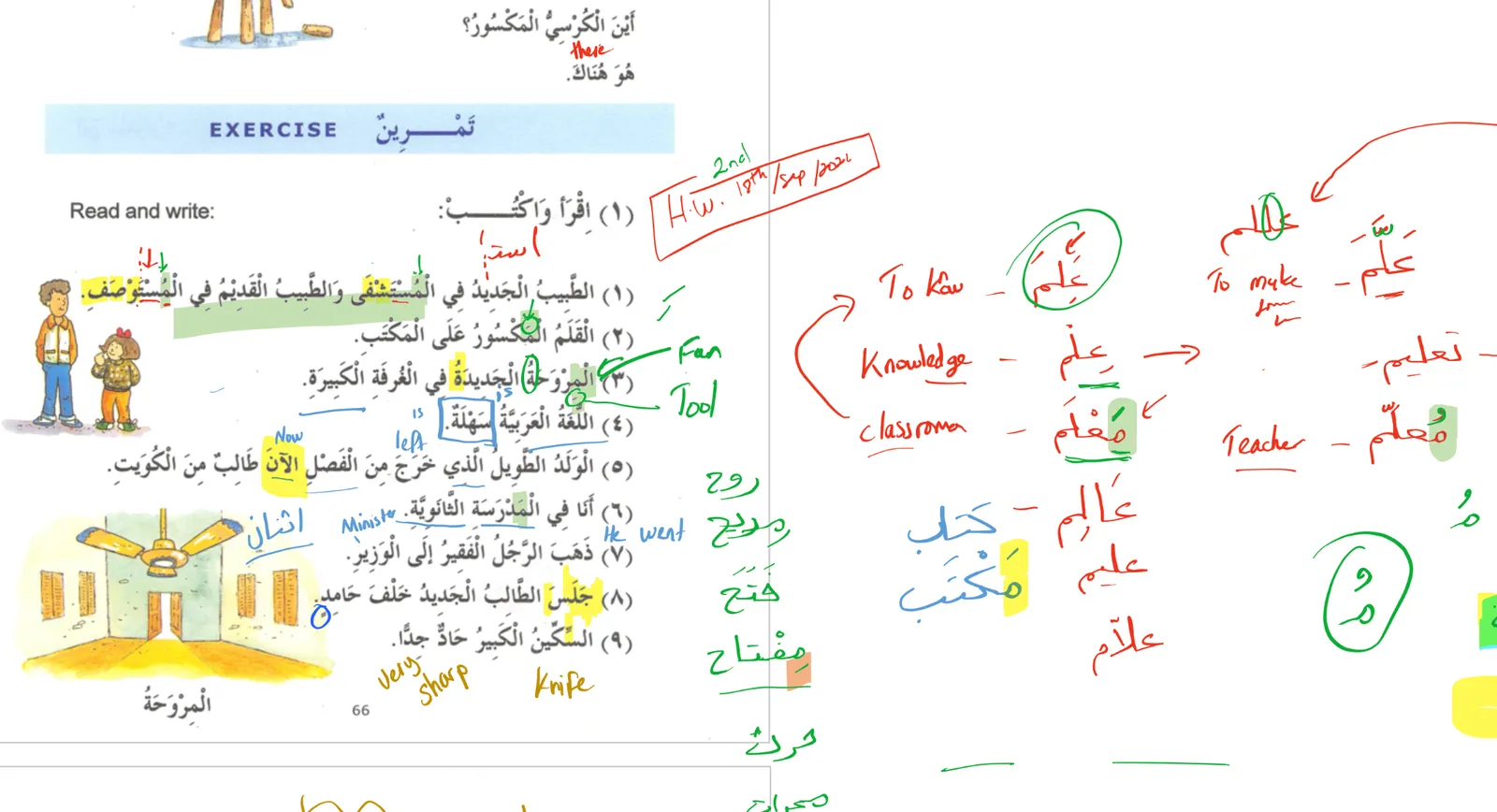
For a structured and reliable foundation, we study the widely recognised Madinah Book series. It builds your core vocabulary and fundamental grammar, and because it is so well known, it gives you a clear reference point if you ever continue your studies with other teachers or institutions.
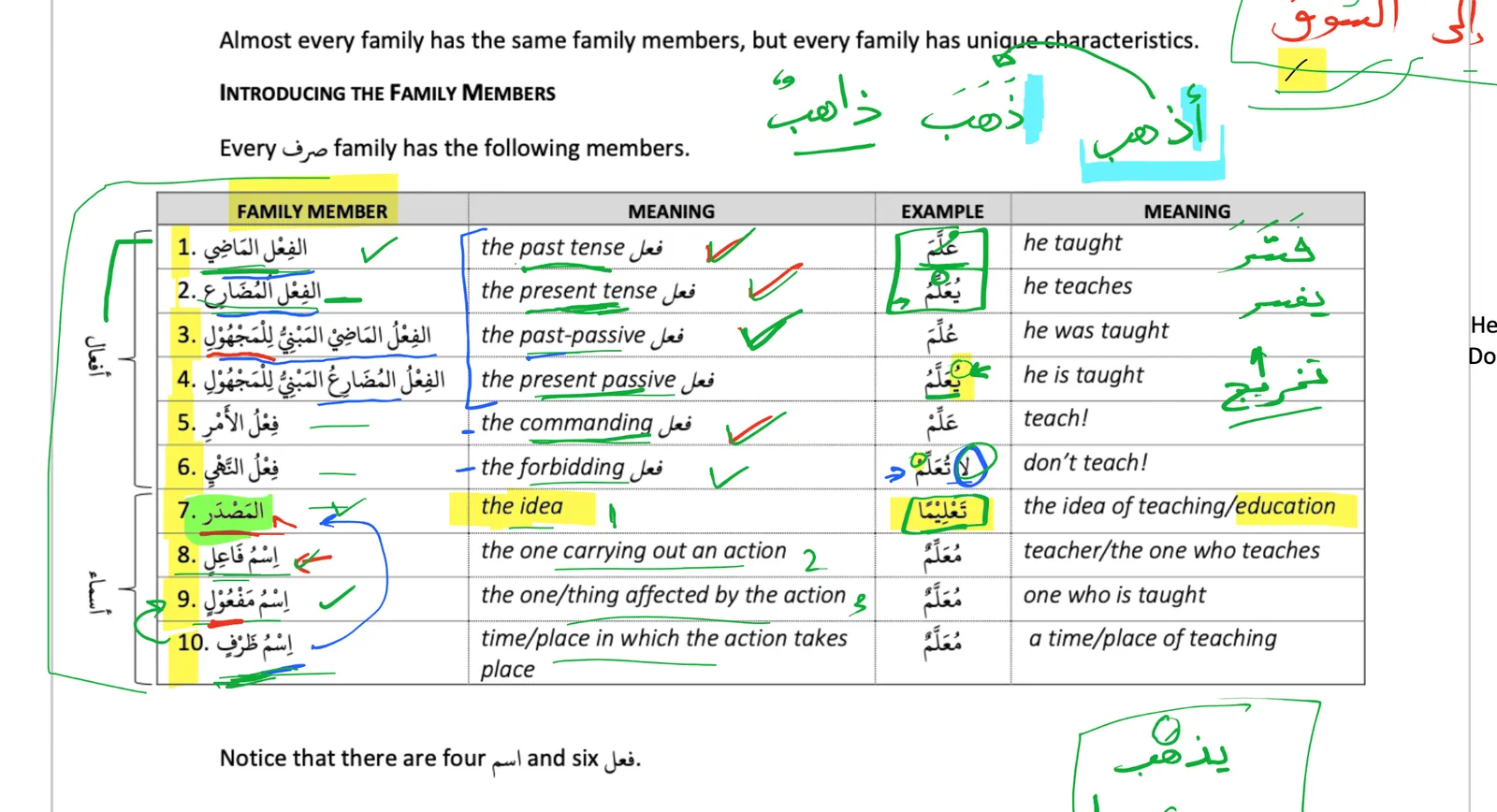
Word morphology (Sarf)
Sarf is the study of how Arabic words are formed. You will learn to recognise the patterns behind word families and to derive many words from a single root. For example:
- “book”, “desk”, “library” and “office” all come from the root for writing
- “lesson”, “school” and “teacher” all come from the root for studying
We also explore the patterns (awzan) that Allah’s Names are built on. Each pattern adds its own shade of meaning to the root, giving every Name its specific meaning and a deeper appreciation of the language of the Quran.
Roots and patterns
Scroll and watch each root grow
Three letters hold an idea. Pour them into different patterns and a whole family of words appears.
A verse, word by word
Tap a word to look inside it
All praise is for Allah, Lord of the worlds. Surah Al-Fatihah, verse 2
الْحَمْدُ
al-ḥamdu
All praise
Rootحمدpraise, thanks
Grammar A noun with "al-" (the). It is the subject of the sentence (mubtada'), so it ends in -u (marfūʿ).
لِلَّهِ
lillāhi
is for Allah
Grammar The preposition li ("for, belongs to") joined to the name Allah, which therefore ends in -i (majrūr). Together they complete the sentence as its predicate (khabar).
رَبِّ
rabbi
Lord
Rootرببto nurture, to look after
Grammar Describes Allah, so it follows His case and ends in -i. It is also the first half of an idafah, "Lord of …" (muḍāf).
الْعَالَمِينَ
al-ʿālamīn
of the worlds
Rootعلمto know, a sign
Grammar The second half of the idafah (muḍāf ilayh), so it is majrūr, shown here by the plural ending -īna.
Sentence structure & components
X-ray an Arabic sentence
Two clues unlock any Arabic sentence: the first word tells you what kind of sentence it is, and the little vowel at the end of each word tells you its job. Try it yourself.
Step 1 · The first word
Does the sentence start with a thing or an action?
Arabic reads from right to left, so the first word is the one on the right.
First wordالطَّالِبُthe studentمُجْتَهِدٌhardworking
at-talibu mujtahidun: The student is hardworking.
First wordقَرَأَreadالطَّالِبُthe studentكِتَابًاa book
qara’a at-talibu kitaban: The student read a book.
Is الطَّالِبُ (the student) a thing or an action?Is قَرَأَ (read) a thing or an action?
Starts with a noun اسم
الجملة الاسمية
Nominal sentence
Starts with a verb فعل
الجملة الفعلية
Verbal sentence
Yes! الطَّالِبُ (the student) is a noun, so this is a nominal sentence.Yes! قَرَأَ (read) is a verb, so this is a verbal sentence.
Step 2 · Nominal sentence
الجملة الاسمية has two parts
Tap each word, starting from the right, to X-ray it.
at-talibu mujtahidun: The student is hardworking.
What it’s aboutمبتدأ Mubtada
Usually starts with ال (“the”) and ends with a Dammah: “-u”.
The endings to look for
- بُDammah sounds “-u”a small curl on top, as on الطَّالِبُ
- دٌTanween Dammah sounds “-un”the curl doubled, as on مُجْتَهِدٌ
Without the vowel marks, the endings give no clue. Switch them back on to see them.
Step 3 · Verbal sentence
الجملة الفعلية has three parts
Tap each word, starting from the right, to X-ray it.
qara’a at-talibu kitaban: The student read a book.
The actionفعل Fi’l
The action word. When it comes first, the sentence is a verbal sentence.
Who does itفاعل Faa’il
Comes after the verb and ends with a Dammah (“-u”), just like the مبتدأ, so it has the same colour.
What it’s done toمفعول به Maf’ul bihi
Receives the action and ends with a Fathah (here a double Fathah, Tanween: “-an”).
The endings to look for
- بُDammah sounds “-u”a small curl on top, as on الطَّالِبُ
- بًاTanween Fathah sounds “-an”two little dashes on top, as on كِتَابًا
Without the vowel marks, the endings give no clue. Switch them back on to see them.
Your turn · 1 of 4
You just analyzed Arabic sentence structure like a pro!
Ready to practice making your own?
Book a free lesson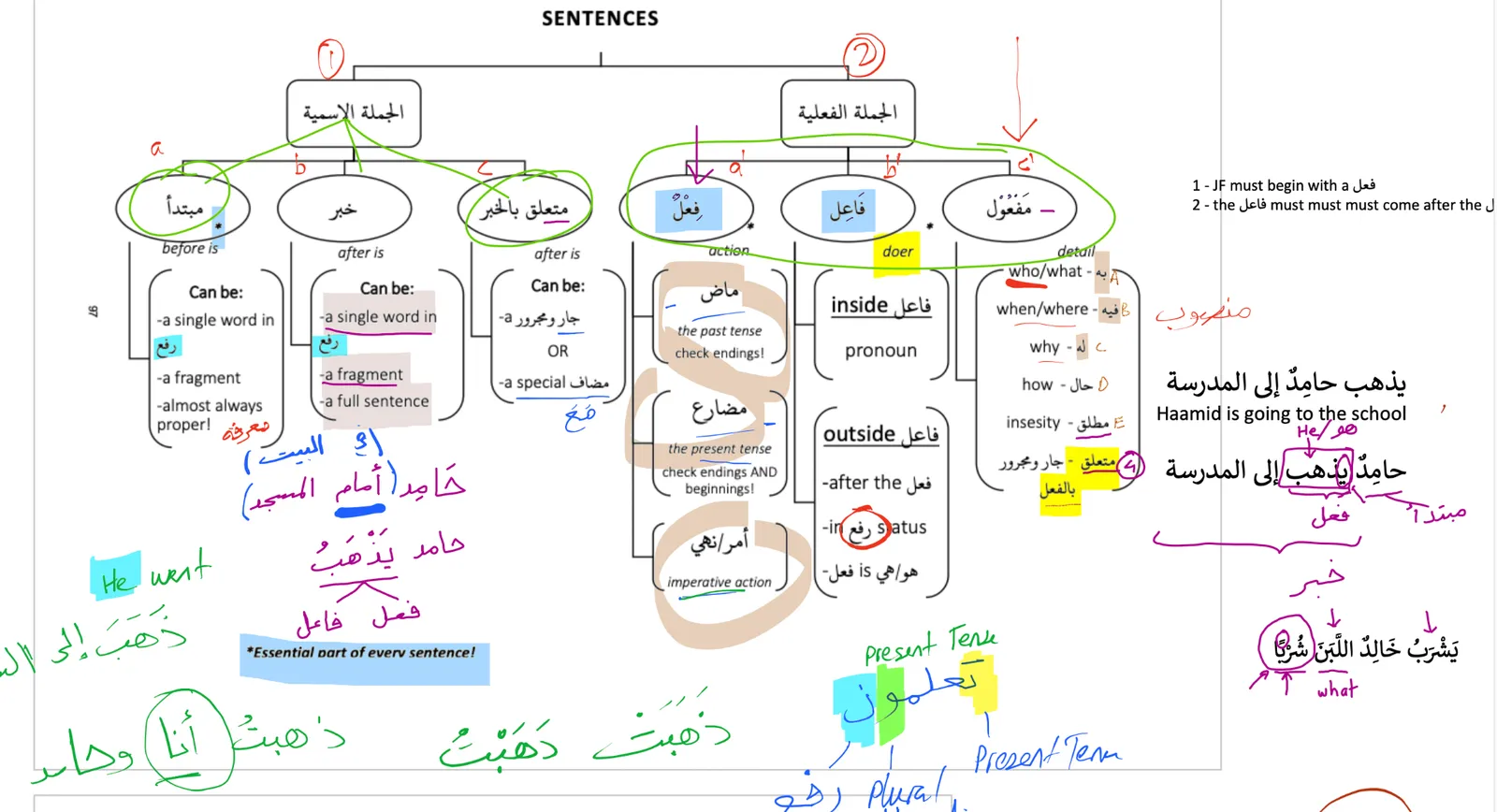
Free practice
Practise this for free
Exercises
Resources
- Arabic Command Tense Conjugation Chart (فِعْل أَمْر)PDF, free to download
- Arabic Past Tense Conjugation Chart (فِعْل مَاضِي)PDF, free to download
- Arabic Present Tense Conjugation Chart (فِعْل مُضَارِع)PDF, free to download
- Essential Arabic Particles and Connectors GuidePDF, free to download
- Madinah Book 1 Grammar & Key Patterns Cheat SheetPDF, free to download